Violence in North Africa, Middle East puts health of 24 million children in jeopardy – UNICEF
“Violence is crippling health systems in conflict-affected countries and threatens children’s very survival,” said Geert Cappelaere, UNICEF Regional Director for the Middle East and North Africa. “Beyond the bombs, bullets and explosions, countless children are dying in silence from diseases that could easily be prevented and treated.”
Millions of children in Yemen, Syria, the Gaza Strip, Iraq, Libya and Sudan are lacking nutritious food and being deprived of essential health care. Moreover, water and sanitation services have been compromised, causing waterborne diseases to spread.
“When children can’t access healthcare or improved nutrition, when they drink contaminated water, when they live surrounded by waste with no sanitation, they become ill and some die as a result,” said Cappelaere. “There is very little standing between them and life-threatening illness, especially when humanitarian access is denied.”
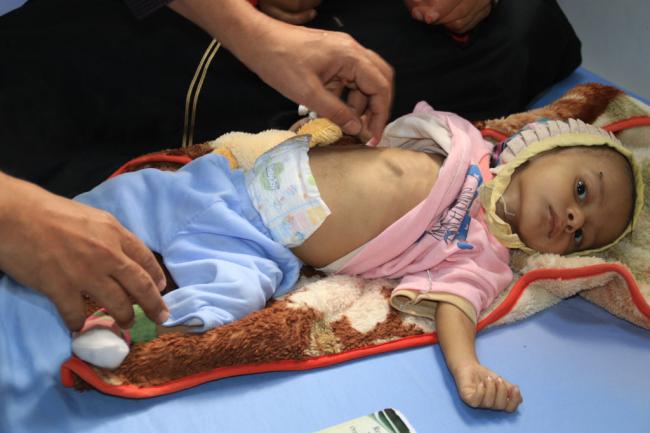
The two-year conflict in Yemen has plunged the country into one of the world’s worst humanitarian crises with widespread acute malnutrition leaving some 9.6 million children in need. For more than seven months, health care and sanitation workers have not been paid and contaminated water sources, untreated sewage and uncollected garbage have sparked a cholera outbreak, with 323 associated deaths in the last month alone.
The conflict in Syria has rendered 5.8 million children in need. Lifesaving supplies are regularly removed from the few entering convoys and many children lack vaccinations. Those who need it, struggle to get treatment as attacks on health facilities have become commonplace – almost 20 per month between January and March this year. The few operational hospitals function with limited staff while the threat of polio – such as the outbreak that hit Syria in 2013 – still loo
In Iraq, where 5.1 million children are at risk, water supplies in camps for the displaced around Mosul are stretched to the limit as new families arriving daily – many with malnourished children. UNICEF estimates that for the past seven months, 85,000 children have been trapped in western Mosul, with limited medical access and no humanitarian aid.
Immunization programmes in Libya have been challenged since the 2011conflict erupted, with suspected measles cases reported among young children. Without new funding, over 1.3 million children will not be vaccinated against the highly contagious and potentially fatal measles and rubella.
In just eight months, over 8,000 cases of acute watery diarrhoea have been recorded in Sudan’s conflict-affected areas, which are set to rise rapidly once the rainy season begins in June. Some 2.3 million children there are in need.
Across these countries, UNICEF is working to provide children with safe water, water treatment, medical and nutrition supplies but as conflicts continue, and amid a shrinking humanitarian space, challenges to reach all vulnerable children with lifesaving assistance are growing.
Photo: UNICEF/Abdoo Al-Karim
Source: www.justearthnews.com
Support Our Journalism
We cannot do without you.. your contribution supports unbiased journalism
IBNS is not driven by any ism- not wokeism, not racism, not skewed secularism, not hyper right-wing or left liberal ideals, nor by any hardline religious beliefs or hyper nationalism. We want to serve you good old objective news, as they are. We do not judge or preach. We let people decide for themselves. We only try to present factual and well-sourced news.
Support objective journalism for a small contribution.