 Disaster Risk Reduction
‘Weak and insufficient’ progress made towards disaster risk reduction
New York: Global progress towards disaster risk management has been weak and insufficient, putting at risk the 2030 Sustainable Development Goals (SDGs), UN Deputy Secretary-General Amina Mohammed told the General Assembly on Thursday.
Countries met to review progress on implementing the Sendai Framework for Disaster Risk Reduction - a landmark 2015 agreement to reduce damage, losses and deaths from natural and man-made hazards by the end of the decade.
During the meeting, they adopted a political declaration which in part calls for improving national mechanisms to share disaster risk data and analysis, including at the regional and international levels.
Change course now
For General Assembly President Csaba Kőrösi, the midterm review was “our last chance before 2030 to collectively change course”, underscoring the critical need for action.
“Eight years on, we must admit that our progress has not kept pace with the urgency of our days. The known number of people affected by disasters has jumped 80-fold since 2015,” he said.
A defining point
Managing risk is not an option but a global commitment, the UN Deputy Secretary-General told the gathering.
“Our world is at a defining point in history. As we review our journey halfway to 2030, we must acknowledge that progress has been weak and insufficient,” Ms. Mohammed said.
As countries did not meet climate and sustainable development commitments, natural disasters that could have been prevented have claimed hundreds of thousands of lives and forced millions to be uprooted, mainly women, children, and other vulnerable groups, she said.
The situation has been exacerbated by the COVID-19 pandemic, the “triple crisis” of climate change, biodiversity loss and pollution, the rising cost of living, skyrocketing inequality and the war in Ukraine.
Further threats stem from structural governance omissions within the banking and global financial systems, while scientists warn of cascading and irreversible impacts of global warning.
“Addressing these challenges means changing our response to risk through systemic thinking, collaborative action, and the smart, agile deployment of responses to prevent, manage and mitigate global risks,” she said.
Unequal progress
The head of the UN Office on for Disaster Risk Reduction (UNDRR), Mami Mizutori, noted that it has not been all storm and strife since 2015.
For example, a growing number of governments have established or upgraded national loss accounting systems, and there has been a significant increase in the number of countries with national strategies for disaster risk reduction.
However, progress remains unequal. Furthermore, risks that become disasters continue to disproportionately impact the world’s least developed countries, small island developing States, landlocked developing and African countries, as well as middle-income countries.
“As risks are left unattended, disasters are materializing faster, surpassing our ability to cope, with increasingly dire consequences for people, livelihoods, society and the ecosystems on which we depend,” she said.
“The imperative to realise the outcome, goal and targets of the Sendai Framework is more important today than ever before.”
A survivor’s story
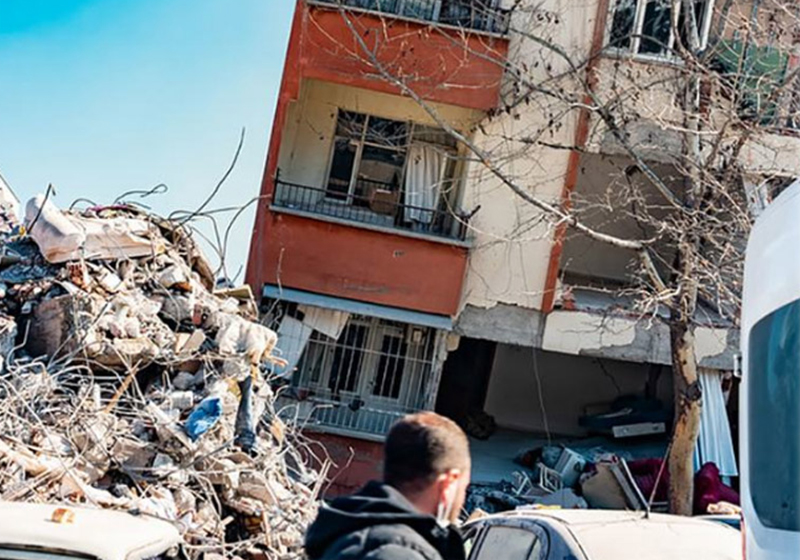
This point was further emphasized by Mustafa Kemal Kılınç from Türkiye, who survived the devastating earthquake in February that killed upwards of 50,000 people.
The 23-year-old university student was visiting his family in his hometown, Hatay, when the disaster struck, reducing thousands of buildings to rubble and leaving countless people homeless.
“I am here today because our building did not collapse. This is because our contractor had applied high standards to make our building earthquake resistant,” he said.
Mustafa and his family – seven people in total – lived in their car for a week, amid freezing temperatures and heavy rain, before moving to a train wagon. They eventually settled with relatives across the country and returned to Hatay several weeks later.
“We cannot predict natural disasters. But we can certainly be prepared whenever and wherever they happen,” he said. “I hope that as a result of your work, there will be less disaster victims like myself around the world.”
Support Our Journalism
We cannot do without you.. your contribution supports unbiased journalism
IBNS is not driven by any ism- not wokeism, not racism, not skewed secularism, not hyper right-wing or left liberal ideals, nor by any hardline religious beliefs or hyper nationalism. We want to serve you good old objective news, as they are. We do not judge or preach. We let people decide for themselves. We only try to present factual and well-sourced news.
Support objective journalism for a small contribution.