 Parastoo Ahmadi
What happened after Iranian female singer performed without a Hijab will shock you
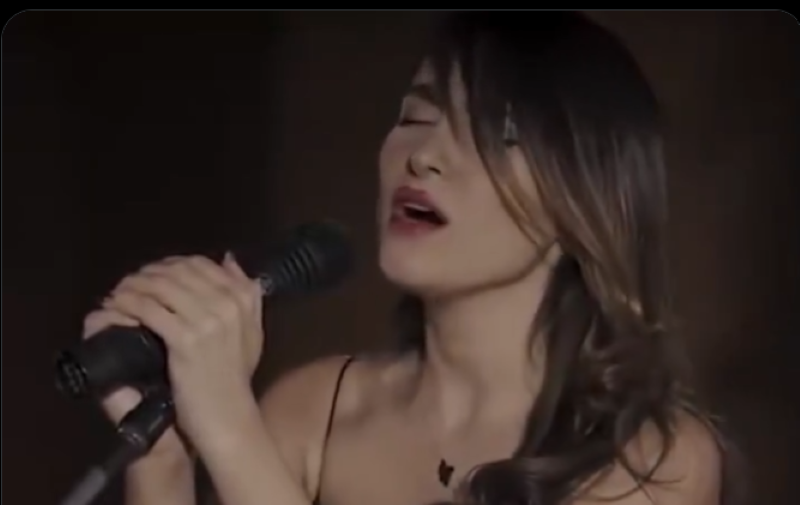
An Iranian court has sentenced singer Parastoo Ahmadi and eight members of a production team, including musicians, to 74 lashes for performing without wearing a hijab during a concert that was livestreamed on Ahmadi's YouTube channel in 2024.
According to court documents, a criminal court in Qom province also imposed a two-year travel ban and a two-year prohibition on artistic activities on the artists. The charges included offending public decency through the production and online publication of what authorities described as "vulgar and immoral content", The Guardian reported.
Ahmadi had performed the patriotic song Az Khoone Javanane Vatan (From the Blood of the Youth of the Homeland) without a hijab during a livestreamed concert in December 2024. The performance went viral and reportedly led to her brief detention.
She was later released, but authorities subsequently initiated formal legal proceedings over the publication of the video.
Bahar Ghandehari, Director of Advocacy at the US-based Center for Human Rights in Iran, criticised the sentence, describing it as evidence that human rights conditions in the country remain unchanged.
"Ahmadi's punishment of 74 lashes for merely singing and appearing without a hijab is yet another reminder that human rights conditions in Iran have not changed, despite the Iranian authorities' wartime propaganda campaign aimed at improving their image," Ghandehari told The Guardian.
One day after the U.S. signed a deal with the Islamic Republic، the regime in Iran, handed Parastoo Ahmadi 74 lashes for singing on YouTube.
— Masih Alinejad 🏳️ (@AlinejadMasih) June 18, 2026
They call America the Great Satan. And then they flew to the table and signed a deal with the «Devil«. But a woman’s voice scared them… pic.twitter.com/FMJdKD7EGZ
She said the case highlighted the contrast between the government's public messaging and the treatment of artists and activists.
Moein Khazaeli, a human rights lawyer with Dadban, a legal counselling centre for Iranian activists, argued that the sentence lacked a legal basis.
"Singing, performing music and producing or disseminating musical works by women are not criminalised under Iranian criminal law. Consequently, such activities cannot reasonably be construed as the production, distribution or publication of obscene content," he said.
Khazaeli further argued that corporal punishment raised concerns under international human rights standards.
"The imposition of a flogging sentence against artists, civil society activists or other citizens is not merely a matter of domestic criminal law. It also raises serious concerns regarding states' international obligations to prohibit torture and safeguard human dignity," he said.
He added that many human rights organisations consider flogging to be a form of torture and inhuman treatment rather than a legitimate punishment.
Iranian actor Setareh Maleki, who went into exile after starring in filmmaker Mohammad Rasoulof's Oscar-nominated film The Seed of the Sacred Fig, said Ahmadi's performance had deeply resonated with her.
"When I watched the video of Parastoo Ahmadi's concert, it reignited the spirit of resistance in me. For days, I kept watching the videos over and over again, and I felt immensely proud of Parastoo," Maleki told The Guardian.
Reacting to the sentencing, the Hana Human Rights Organisation said corporal punishment, including flogging, is regarded by international human rights bodies as degrading and incompatible with human dignity.
"Corporal punishment, including flogging, is recognized by international human rights bodies as degrading and incompatible with human dignity, and has no place in the legal systems of most countries today," the organisation said.
Support Our Journalism
We cannot do without you.. your contribution supports unbiased journalism
IBNS is not driven by any ism- not wokeism, not racism, not skewed secularism, not hyper right-wing or left liberal ideals, nor by any hardline religious beliefs or hyper nationalism. We want to serve you good old objective news, as they are. We do not judge or preach. We let people decide for themselves. We only try to present factual and well-sourced news.
Support objective journalism for a small contribution.