WHO and partners appeal for $2.2 billion with humanitarian health needs at ‘all-time high’
According to WHO’s Humanitarian Response Plans 2016, launched on Tuesday in Geneva, the agency and health partners are working together to provide urgent health services including essential medicines, vaccines and treatment for diseases such as cholera and measles, often in insecure and extremely difficult settings.
Collectively, $ 2.2 billion is needed to provide lifesaving health services, of which WHO is appealing for $480 million.
“The risks to health caused by humanitarian emergencies are at an all-time high,” said Dr. Bruce Aylward, WHO’s interim Executive Director, Outbreaks and Health Emergencies, in a press release.
“And the situation is getting worse. The increasing impact of protracted conflict, forced displacement, climate change, unplanned urbanization and demographic changes all mean that humanitarian emergencies are becoming more frequent and severe,” he stressed.
In Syria, one of the biggest humanitarian emergencies, WHO and partners are seeking funds to provide 11.5 million people with health services including trauma and mental health care, and to provide vaccines, medicines and surgical supplies to almost five million Syrian refugees living in neighbouring countries.
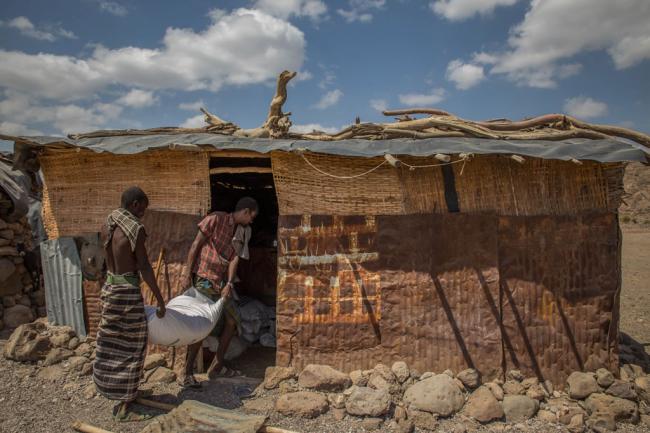
WHO also needs urgent funds to support 6.8 million people threatened by the worst drought in decades in Ethiopia, with one of the priorities to provide emergency health services to save the lives of more than 400 000 severely malnourished children.
In addition to more than 30 protracted emergencies, WHO is also responding to sudden onset emergencies, such as Cyclone Winston that impacted Fiji in February 2016, and to infectious disease outbreaks including Zika virus, the remaining risks of Ebola in West Africa and Angola’s worst outbreak of yellow fever in 30 years.
In one of the most profound transformations in its history, WHO is rolling out a new Health Emergencies Programme that will increase operational capacity in countries and enable a faster, effective and predictable response to all kinds of health emergencies including outbreaks and humanitarian crises.
Photo: UNICEF/Mulugeta Ayene
Support Our Journalism
We cannot do without you.. your contribution supports unbiased journalism
IBNS is not driven by any ism- not wokeism, not racism, not skewed secularism, not hyper right-wing or left liberal ideals, nor by any hardline religious beliefs or hyper nationalism. We want to serve you good old objective news, as they are. We do not judge or preach. We let people decide for themselves. We only try to present factual and well-sourced news.
Support objective journalism for a small contribution.