 Iran
Iran
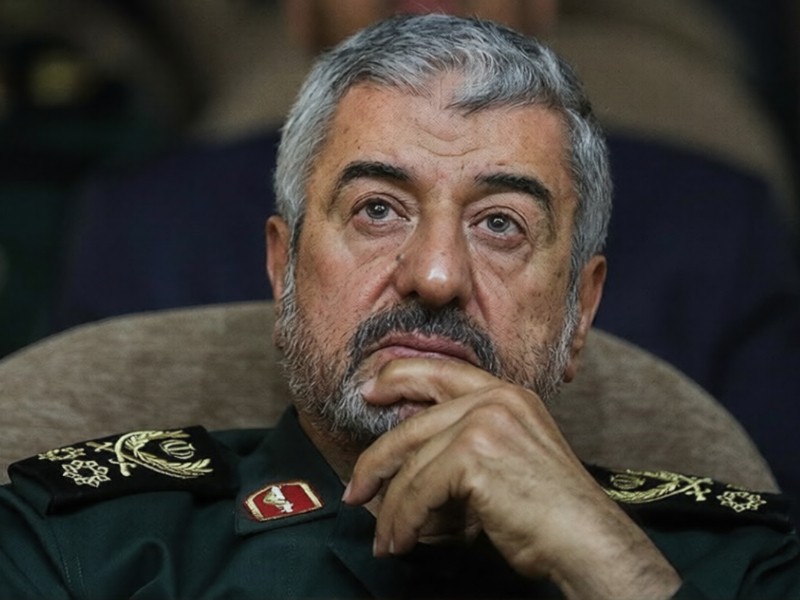
Who is Mohammad Ali Jafari? The mastermind of Iran’s impenetrable ‘Mosaic Defence’ doctrine
As conflict intensifies in West Asia following the US-Israel air campaign against Iran, analysts increasingly point to a military doctrine developed years earlier as a key factor behind Tehran’s ability to continue fighting.
That strategy, known as the Mosaic Defence, was designed by Iranian military strategist Mohammad Ali Jafari.
Despite heavy strikes on leadership targets during the operation reportedly launched by the United States and Israel, Iran’s military structure has remained operational.
Experts say the resilience stems largely from the decentralised defence doctrine introduced during Jafari’s tenure in the country’s elite security establishment.
Iranian officials have also acknowledged that the strategy was the result of a long-term study of American military campaigns in the region.
A strategy born from two decades of study
According to Iran’s Foreign Minister Seyed Abbas Araghchi, the country’s defence doctrine evolved through nearly two decades of analysing the failures and limitations of US military operations in neighbouring regions.
Araghchi has described the strategy as a framework that enables Iran to continue military operations even when key leadership structures face disruption.
He said that attacks on the capital or high-level command centres would not halt the country’s ability to fight because the defence system functions through decentralised networks.
These remarks came shortly after reports that Iran’s Supreme Leader Ali Khamenei had been killed during US-Israeli strikes, an event that could have destabilised a more centralised command structure.
The man behind the doctrine
Jafari is widely regarded as the principal architect of Iran’s Mosaic Defence concept.
A former commander-in-chief of the powerful Islamic Revolutionary Guard Corps, he led the organisation from 2007 until 2019.
His military career began shortly after Iran’s Islamic Revolution, when he joined the IRGC and worked in intelligence operations in the country’s Kurdistan province.
Over the years, Jafari played a key role in reshaping Iran’s strategic thinking on warfare and defence.
He also participated in the long and brutal Iran-Iraq War, an experience that heavily influenced his approach to military doctrine.
During the 1990s, Jafari rose through the ranks and eventually became commander of the IRGC’s ground forces.
Later, he headed the elite Sarallah unit before being appointed director of the IRGC’s Centre for Strategic Studies in 2005.
In that role, he began developing what would eventually become the Mosaic Defence doctrine, drawing lessons from both the Iran-Iraq War and the US-led invasion of Iraq in 2003.
Iran’s 'Mosaic Defence' doctrine
The Mosaic Defence strategy reorganises Iran’s military system into a network of regional and semi-independent units rather than relying on a single centralised command.
Under this framework, the IRGC, regular army formations, Basij militia units, missile forces, naval assets and regional command centres operate as parts of a distributed defence network.
If one segment is disabled by enemy action, other components continue functioning independently.
The IRGC itself is divided into 31 provincial commands, each structured as a largely self-sufficient military formation.
These regional units possess their own intelligence systems, weaponry and command capabilities.
Even if communications with central leadership are disrupted, the doctrine allows local commanders to continue operations autonomously.
A system designed to resist decapitation strikes
Military experts argue that the doctrine was specifically designed to counter “decapitation strikes”, a strategy often used by technologically superior adversaries to eliminate leadership and paralyse command structures.
Michael Connall, a researcher specialising in Iranian military culture, has noted that the restructuring was intended to make any effort to dismantle Iran’s defence capabilities significantly more difficult.
By dispersing authority and operational capacity across numerous regional units, the doctrine ensures that the country’s warfighting capability does not collapse if senior leadership is removed.
Two core objectives of the strategy
The Mosaic Defence doctrine pursues two primary goals.
First, it aims to make Iran’s military command structure extremely difficult to destroy through conventional attacks.
Second, it seeks to transform the battlefield into a complex and layered environment that combines conventional defence, irregular warfare, local mobilisation and long-term attritional conflict.
The doctrine assumes that in any confrontation with stronger military powers such as the United States or Israel, Iran could temporarily lose centralised control.
However, regional units would still retain the authority and ability to operate independently.
Role of ‘Axis of Resistance’
Another element of the strategy involves Iran-backed groups operating across the Middle East.
These organisations, often collectively referred to as the “Axis of Resistance”, form an external extension of Iran’s strategic network.
In past cases, individuals linked to groups such as Hezbollah have reportedly admitted involvement in sleeper cells prepared to act if conflict between Iran and the United States escalated.
Such networks, analysts say, complement the Mosaic Defence model by extending Iran’s strategic reach beyond its borders.
Why Iran chose a decentralised model
Iran’s shift toward a distributed defence structure was heavily influenced by regional developments in the early 2000s.
The rapid collapse of Saddam Hussein’s regime following the 2003 invasion of Iraq highlighted the vulnerability of highly centralised military systems.
The earlier US intervention in Afghanistan in 2001 reinforced this lesson for Iranian strategists.
In response, Tehran moved away from traditional hierarchical command structures and adopted a decentralised system capable of surviving leadership losses and sustained military pressure.
Today, analysts believe that the doctrine designed by Mohammad Ali Jafari continues to shape Iran’s defence posture, enabling the country to sustain military operations even under intense external pressure.
Support Our Journalism
We cannot do without you.. your contribution supports unbiased journalism
IBNS is not driven by any ism- not wokeism, not racism, not skewed secularism, not hyper right-wing or left liberal ideals, nor by any hardline religious beliefs or hyper nationalism. We want to serve you good old objective news, as they are. We do not judge or preach. We let people decide for themselves. We only try to present factual and well-sourced news.
Support objective journalism for a small contribution.