With half of Somaliland children not in school, UNICEF and partners launch education access programme
New York, July 14 (IBNS): Access to education in Somaliland is extremely limited, with more than 50 per cent of children in Somaliland out of school. In an effort to address the problem, the UN children’s fund, UNICEF, has partnered with the government, and the global fund Education Cannot Wait, to launch a programme designed to help children affected by ongoing crises in the country.
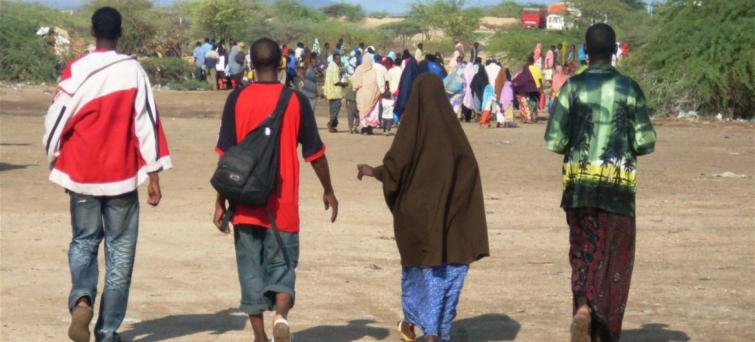
rought, food insecurity, poverty and inequality are some of the challenges that hinder efforts to get more Somaliland children and youth in schools. The education prospects for children in rural areas, and school age Internally Displaced Persons (IDPs) in Somaliland are particularly poor: only 26 per cent of children in rural communities, and 16 per cent of IDP children, are enrolled in primary schools.
The programme, which will run for three years, has a budget of $64 million, with initial seed money of $6.7 million provided by Education Cannot Wait. The remaining $57.3 million is being sought from additional donors. The programme is expected to provide more than 54,000 children with an education.
A UNICEF statement released on Saturday explained that the aim is to “achieve improved learning outcomes for school-aged children who are affected by emergencies”, by increasing access to quality, inclusive, gender-sensitive, child-friendly and sustainable education.
“In our collective quest to reach the Global Goals, it is unacceptable that one in every two children in Somaliland doesn’t have the opportunity of an education”, said Yasmine Sherif, Director of Education Cannot Wait. “With the launch of this programme, we firmly stand with these children and youth. We stand with the Government and all our education partners”.
Education Cannot Wait is the global fund for education in emergencies and protracted crises, and is administered under UNICEF’s rules and regulations. Education, the statement emphasises, is a “central pillar” of the long-term stability and socio-economic growth plans of the Somaliland Government, which “recognizes that the economic growth of the country correlates with the proportion of people with access to education.”
Education Cannot Wait is the global fund for education in emergencies and protracted crises, and is administered under UNICEF’s rules and regulations. UNICEF is committed to working with the Ministry of Education and Science in Somaliland to strengthen children’s resilience through education, providing technical assistance, pilot projects, and overall system strengthening.
Image: IRIN/Mohamed Amin Jibril
Support Our Journalism
We cannot do without you.. your contribution supports unbiased journalism
IBNS is not driven by any ism- not wokeism, not racism, not skewed secularism, not hyper right-wing or left liberal ideals, nor by any hardline religious beliefs or hyper nationalism. We want to serve you good old objective news, as they are. We do not judge or preach. We let people decide for themselves. We only try to present factual and well-sourced news.
Support objective journalism for a small contribution.