World ‘must nurture the courage to care – and the resolve to act,’ says UN chief, reflecting on 1994 genocide against the Tutsi in Rwanda
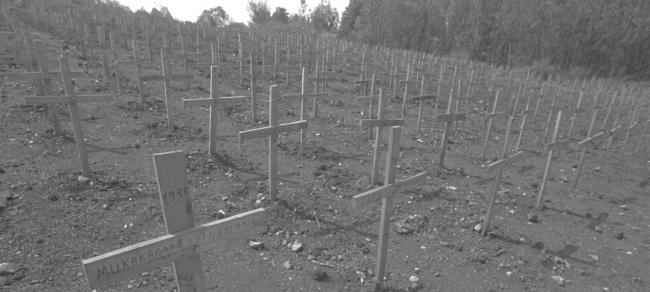
New York, Apr 14 (IBNS): United Nations Secretary-General António Guterres on Friday urged the world to reflect on the suffering of those who perished, as well as survived, the Rwandan genocide, and resolve to prevent such atrocities from ever happening again.
Speaking at an event commemorating the International Day of Reflection on the 1994 Genocide against the Tutsi in Rwanda, he also said reconciliation is possible, even after a tragedy of such monumental proportions.
“Rwanda has learned from the events of 1994. So must the international community,” said the Secretary-General.
Mr. Guterres said he was concerned about the rise of racism, hate speech and xenophobia around the world, such as the violence against the Rohingya community in Myanmar, unimaginable suffering in Syria, and the humanitarian crisis in the Democratic Republic of the Congo.
“Today, people are being killed, displaced and abused in many parts of the world,” he noted, underscoring that States must uphold their fundamental responsibility to protect their people.
In parallel, preventing genocide, crimes against humanity and other serious violations of international law is a shared responsibility, he added.
“It is a core duty of the United Nations [and] our Human Rights Up Front strategy and several UN mechanisms aim to do just that – protect people’s lives and sound an early warning before abuses turn into atrocities,” said Guterres, urging countries to pay heed to the warnings and follow-up with preventative actions to save lives.
Miroslav LajÄák, President of the General Assembly, said: “There are many things to say today. But, I want to start with the simplest, and hardest, message of all. Which is, that we failed. We failed Rwanda. We failed to keep our promises. And, simply, we failed to do our jobs.”
“The United Nations cannot run from this. We must face it – head-on,” he continued, stressing that not only do must the international community focus more on people, it must also work to prevent their suffering.
“This means stronger early warning systems. It means better mechanisms to flag – and respond to – early indicators of genocide, including human rights violations. And it means jumping into action – much sooner, and much faster, than we have in the past.”
Estimates of the number of people killed vary from 800,000 to more than one million. The latest General Assembly resolution designating 7 April as the International Day of Reflection on the 1994 Genocide against the Tutsi in Rwanda cited more than a million people killed during the genocide, including Hutu and others who opposed it.
Also participating in today’s commemoration were Issa Konfourou, Permanent Representative of Mali to the UN, in his capacity as Chair of the African Group; Consolee Nishimwe, author of ‘Tested to the Limit: A Genocide Survivor’s Story of Pain, Resilience and Hope’; and Valentine Rugwabiza, Permanent Representative of Rwanda to the UN. The event was moderated by Alison Smale, the UN Under-Secretary-General for Global Communications.
UNICEF/Giacomo Pirozzi
Support Our Journalism
We cannot do without you.. your contribution supports unbiased journalism
IBNS is not driven by any ism- not wokeism, not racism, not skewed secularism, not hyper right-wing or left liberal ideals, nor by any hardline religious beliefs or hyper nationalism. We want to serve you good old objective news, as they are. We do not judge or preach. We let people decide for themselves. We only try to present factual and well-sourced news.
Support objective journalism for a small contribution.