World Population Day: ‘A matter of human rights’ says UN
New York, July 12 (IBNS): Family planning was affirmed to be a human right 50 years ago, leading to what would become the annual observation of World Population Day, which focuses attention on the impact the number of children born, has on the world.
In her message for the Day, UN Population Fund (UNFPA) Executive Director Natalia Kanem took that a step further, saying: “Family planning is not only a matter of human rights; it is also central to women’s empowerment, reducing poverty and achieving sustainable development.”
Yet, in developing regions, the UNFPA chief pointed out that some 214 million women still lack safe and effective family planning, for reasons ranging from lack of information or services, to lack of support from their partners or communities.
“This threatens their ability to build a better future for themselves, their families and their communities,” she explained.
UNFPA supports family planning in developing countries by ensuring a reliable supply of a full range of modern contraceptives, strengthening national health systems and promoting gender equality.
“UNFPA is fully committed to continuing to support countries’ efforts to uphold the right of individuals, especially women, to plan a family,” Kanem continued. “We are striving to end all unmet need for voluntary family planning in developing countries, by 2030.”
“But, we cannot do this alone,” underscored the Executive Director, outlining the need for governments, parliamentarians, the private sector and civil society to join forces to make it happen.”
As a first step, she suggested that for a mere 20 cents per person annually, developed countries could close the global family planning funding gap, which Kanem said would be “a strategic and doable investment in the world’s future.”
The Day was inspired by public interest generated by one particular date of huge significance. The UN estimated that it was 11 July, 1987, which the world's population reached five billion people.
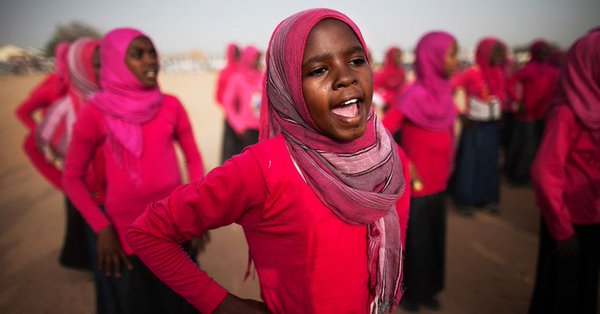
UN Photo/Albert González Farran
Support Our Journalism
We cannot do without you.. your contribution supports unbiased journalism
IBNS is not driven by any ism- not wokeism, not racism, not skewed secularism, not hyper right-wing or left liberal ideals, nor by any hardline religious beliefs or hyper nationalism. We want to serve you good old objective news, as they are. We do not judge or preach. We let people decide for themselves. We only try to present factual and well-sourced news.
Support objective journalism for a small contribution.