Yemen’s children at risk of malnutrition as fighting continues: UNICEF
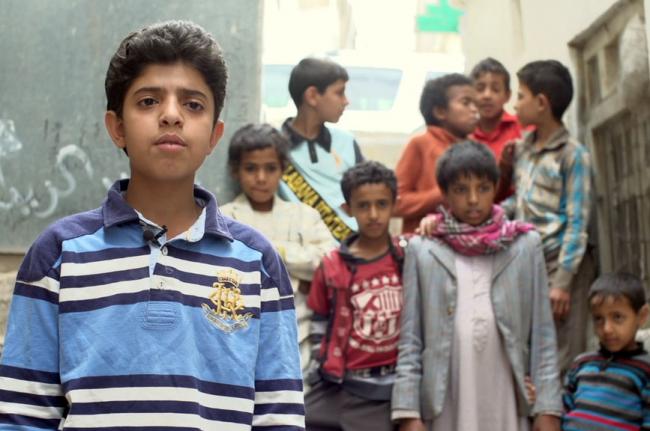
Briefing the press in Geneva, UNICEF spokesperson Christophe Boulierac warned that 120,000 children in Yemen remain at immediate risk of severe malnutrition over the coming three months if health and hygiene services failed to resume normal functioning.
Boulierac explained that restrictions on commercial imports of fuel and food are largely to blame for the rapidly deteriorating situation facing the country’s children.
He added that another 2.5 million children under five years of age were at immediate risk of diarrhoea while 1.2 children were likely to suffer from preventable diseases such as pneumonia and measles as vaccination campaigns had ground to a halt.
More than 1,400 people have been killed and 300,000 have fled their homes in nearly three months of fighting in the war-torn Gulf nation.
Emergency relief and medical teams from abroad are struggling to fly in to scale-up the humanitarian operation to address the needs of increasingly vulnerable Yemenis.
Insecurity and lack of fuel have also limited access to and delivery of services. Partners report difficulty providing medical services as result of the current security situation and continued airstrikes targeting Haradh, Sa'ada and Sana'a.
Food relief partners have reported they have had to suspend assistance in several districts due to lack of fuel.
Jens Laerke, for the Office for the Coordination of Humanitarian Affairs (OCHA), confirmed that regular commercial imports of fuel had become the main issue and called for them to increase.
The primary obstacle, he explained, was an inspection regime instituted by a recent Security Council resolution and which had resulted in a crippling effect on humanitarian operations.
In addition to the limited access to fuel, food imports had also been impacted, cautioned Laerke as he noted that 90 percent of the country depended on their food from imports.
Against that backdrop, the UN’s World Health Organization (WHO) – which also addressed the briefing – cited reports of 484 suspected cases of dengue fever with two reported deaths.
A spokesperson for the WHO said the UN agency was on the ground and trying to send rapid diagnostic kits for both dengue and malaria but could not confirm the dengue cases without lab testing.
The spokesperson added that between 19 March and 4 May the number of casualties across the country had shot up to 1,439 deaths and 5,951 injuries, including 71 children deaths.
Photo: UNICEF Yemen
Support Our Journalism
We cannot do without you.. your contribution supports unbiased journalism
IBNS is not driven by any ism- not wokeism, not racism, not skewed secularism, not hyper right-wing or left liberal ideals, nor by any hardline religious beliefs or hyper nationalism. We want to serve you good old objective news, as they are. We do not judge or preach. We let people decide for themselves. We only try to present factual and well-sourced news.
Support objective journalism for a small contribution.