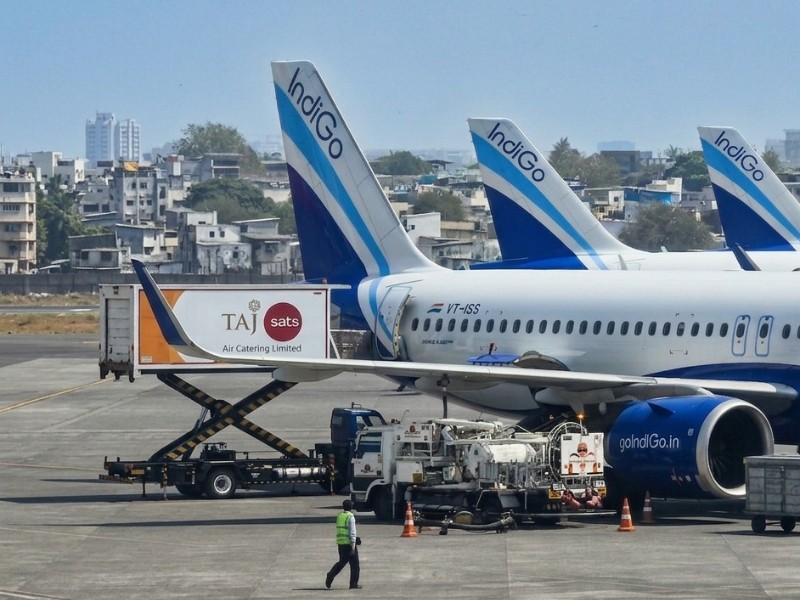
 Jet Fuel
Airlines sound SOS to Centre over soaring ATF costs, say operations becoming unsustainable
India’s aviation sector has raised serious concerns over rising fuel costs, warning that continued price pressure could disrupt operations across multiple carriers.
Airlines, represented by the Federation of Indian Airlines, have approached the government seeking urgent intervention as aviation turbine fuel (ATF) prices surge amid global geopolitical tensions.
Airlines flag risk of operational disruptions
Leading carriers, including Air India, IndiGo and SpiceJet, have cautioned that escalating fuel prices could make several routes financially unviable.
In a communication to the Civil Aviation Ministry, the industry body stated that any abrupt or disproportionate increase in ATF pricing could lead to significant financial losses, potentially resulting in grounded aircraft and cancelled flights.
The federation highlighted that fuel costs, which typically account for around 30–40 percent of airline expenses, have now risen sharply, placing additional strain on already tight margins.
Soaring ATF prices
Airlines pointed out that ATF prices have seen a steep increase, especially for international operations.
While domestic fuel price hikes have been capped, international routes have witnessed a much sharper rise.
The disparity has added to cost pressures, particularly for long-haul flights where fuel consumption is significantly higher.
The industry also noted that fluctuations in refining margins have contributed to elevated ATF prices, even during periods when global crude prices show signs of easing.
Call for immediate govt relief
To manage the crisis, airlines have urged the government to introduce immediate financial relief measures.
These include a temporary suspension of excise duty on ATF, currently at 11 percent, and a more balanced pricing framework for both domestic and international operations.
The federation also recommended adopting a uniform pricing mechanism, similar to earlier systems that limited extreme variations between crude oil and refined fuel prices.
Impact of global oil supply disruptions
The surge in fuel costs has been linked to disruptions in global oil supply chains, particularly due to tensions surrounding the Strait of Hormuz.
This critical maritime corridor carries a significant share of the world’s oil, and any restrictions or instability in the region directly influence fuel prices worldwide.
The ongoing situation in West Asia has contributed to volatility in crude oil markets, which has in turn driven up aviation fuel costs.
Pressure on routes and capacity
Airlines have indicated that sustained high fuel prices could force them to reassess route viability, reduce capacity, or adjust fares.
They noted that the current cost environment is affecting cash flows and limiting operational flexibility, particularly on international routes where pricing adjustments are more constrained.
As fuel costs continue to rise, the aviation sector remains under pressure, with airlines seeking policy support to stabilise operations and manage escalating expenses.
Support Our Journalism
We cannot do without you.. your contribution supports unbiased journalism
IBNS is not driven by any ism- not wokeism, not racism, not skewed secularism, not hyper right-wing or left liberal ideals, nor by any hardline religious beliefs or hyper nationalism. We want to serve you good old objective news, as they are. We do not judge or preach. We let people decide for themselves. We only try to present factual and well-sourced news.
Support objective journalism for a small contribution.