Justice Sanjay Karol retires from Supreme Court; leaves legacy of compassion, inclusion
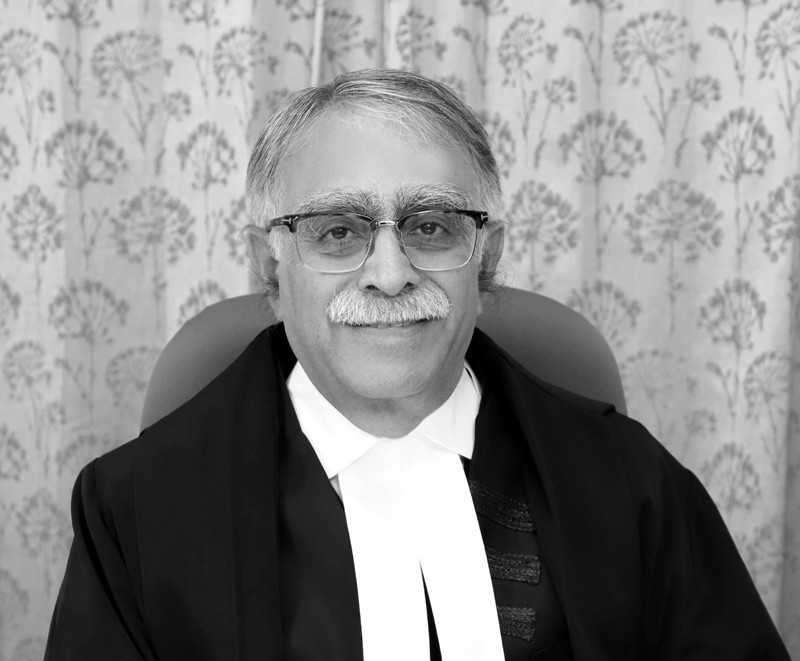
Justice Sanjay Karol retired from the Supreme Court on Saturday, bringing to a close a distinguished judicial career marked by compassion, accessibility and a strong commitment to nurturing young members of the legal profession.
Fondly called 'Chachaji' by members of the Bar, Justice Karol became known for his warm and encouraging interactions with young advocates.
During his career, he appointed nearly 500 young lawyers as amicus curiae in various cases, giving them opportunities to participate in significant legal proceedings.
His nickname also carried a lighter reference to his appearance, which reminded some members of the Bar of the beloved comic-book character Chacha Chaudhary.
Homemakers' unpaid work gets economic recognition
One of Justice Karol's significant contributions came through his recognition of the economic value of unpaid household work.
In a judgment delivered on June 11, 2026, he assessed the monthly economic contribution of a woman who died in a road accident at Rs 30,000 while determining compensation for her family.
The Supreme Court subsequently enhanced the compensation from Rs 8 lakh awarded by the High Court to Rs 63 lakh.
The judgment placed household responsibilities, childcare and women's contribution to family life within a broader social and economic framework.
Justice Karol observed that women's contribution extends beyond biological reproduction and includes the creation of the "human capital" that plays an important role in the country's economic development.
Language, dignity also reflected in his judgments
In another notable ruling, Justice Karol directed that the Railways should avoid referring to passengers as "second class", reflecting his emphasis on dignity and sensitivity in official language.
His humane approach extended beyond his courtroom work.
During his farewell ceremony, Chief Justice of India Surya Kant recalled an incident from Justice Karol's time as a judge of the Himachal Pradesh High Court.
Justice Karol had reportedly seen a milkman collapse by the roadside, stopped his car, helped him and ensured that he was taken to hospital for treatment.
From Himachal Pradesh to the Supreme Court
Justice Karol, who hails from Garli in Himachal Pradesh, the state's first heritage village, became a judge of the Himachal Pradesh High Court on March 8, 2007.
He went on to become Chief Justice of the Tripura High Court on November 14, 2018, before serving as Chief Justice of the Patna High Court.
During the COVID-19 pandemic, while heading the Patna High Court, Justice Karol also took steps to arrange food for people in need.
A legacy beyond the courtroom
With his retirement, Justice Karol's judicial journey has come to an end, but his legacy is likely to endure through his judgments and his approach to the legal profession.
His recognition of homemakers' unpaid labour as an economically valuable contribution stands among his notable judicial contributions.
For the young lawyers who came to know him as 'Chachaji', however, his lasting legacy may be his accessibility, encouragement and the sense of humanity he brought to the courtroom and the wider legal community.
Support Our Journalism
We cannot do without you.. your contribution supports unbiased journalism
IBNS is not driven by any ism- not wokeism, not racism, not skewed secularism, not hyper right-wing or left liberal ideals, nor by any hardline religious beliefs or hyper nationalism. We want to serve you good old objective news, as they are. We do not judge or preach. We let people decide for themselves. We only try to present factual and well-sourced news.
Support objective journalism for a small contribution.