 Jeff Bezos
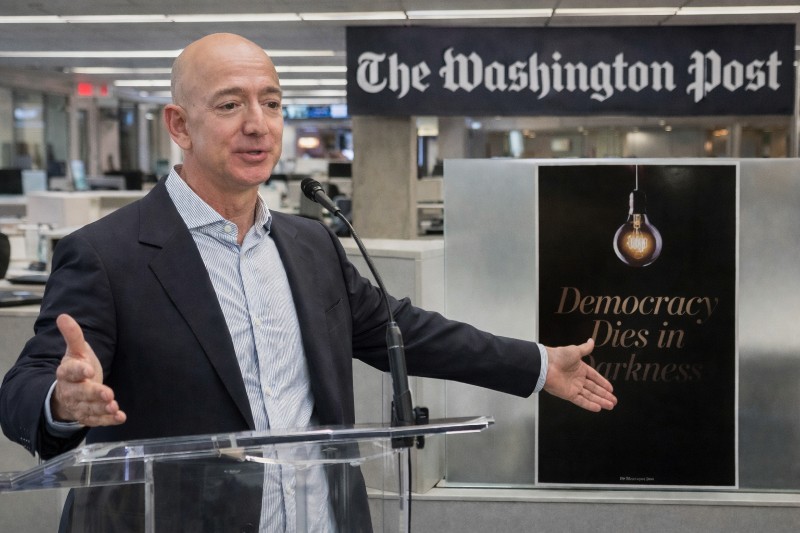
'Democracy dies in billionaire hands': Jeff Bezos faces firestorm after Washington Post slashes one-third of its newsroom
The Washington Post has triggered a fierce international debate after announcing layoffs affecting nearly one-third of its workforce, including more than 300 newsroom employees.
The scale of the cuts has placed renewed scrutiny on the newspaper’s owner, Amazon founder Jeff Bezos, whose personal fortune stands at $246.3 billion, according to Forbes.
The layoffs, confirmed on Wednesday, affected almost every major newsroom division.
International and local reporting teams, the Sports desk, and the Books section faced deep reductions, while the paper’s daily “Post Reports” podcast was shut down.
Staff were instructed to stay home as termination notices were sent, many delivered by email.
Newsroom cuts framed as ‘strategic reset’
Washington Post executives described the layoffs as a “strategic reset” designed to focus resources on areas with the greatest impact, including politics, national affairs, and security reporting.
Executive Editor Matt Murray said the organisation was responding to “challenging and disappointing realities” across the media industry.
Murray maintained that Bezos remained committed to the Post’s long-term future, saying the owner wanted it to become a “bigger, relevant, thriving institution.”
He added that Bezos does not interfere in daily news coverage or editorial decisions.
Despite these assurances, journalists across the newsroom argued that cuts of this magnitude weaken reporting capacity rather than strengthen it.
Staff appeals to Bezos go unanswered
In the days leading up to the layoffs, employees from multiple sections made direct appeals to Bezos, urging him to intervene.
Three separate letters were sent over a week, calling for the protection of foreign coverage, local Washington reporting, and newsroom collaboration across departments.
None received a response.
As rumours intensified, staff shared videos under the hashtag #SaveThePost and organised a rally outside the newspaper’s headquarters.
Inside the newsroom, employees described a subdued atmosphere, with morale already low before the announcements.
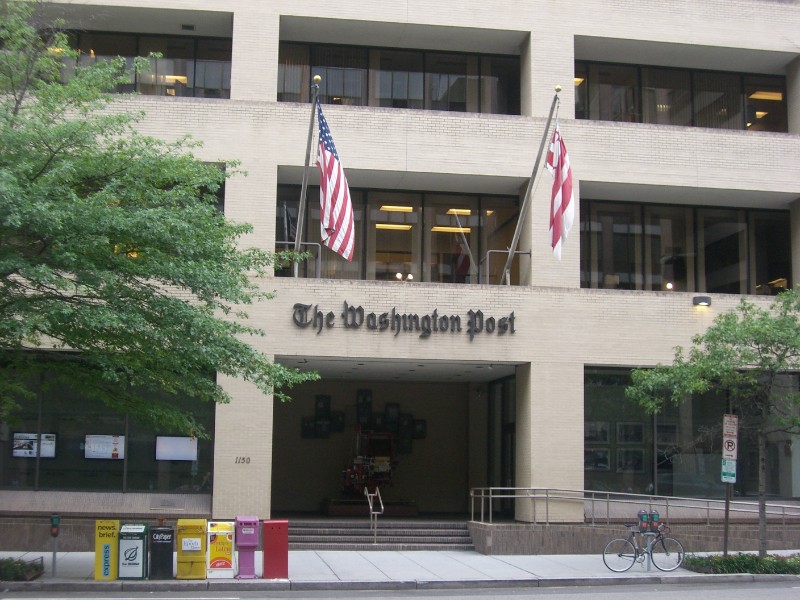 The Washington Post building in Washington, D.C. Photo: Wikimedia Commons/Michael Fleischhacker
Political leaders and journalists react
The layoffs sparked immediate political reaction.
Senator Elizabeth Warren criticised the move, pointing to Bezos’s immense wealth and noting that journalists covering Amazon were among those laid off.
Representative Alexandria Ocasio-Cortez questioned whether the cuts reflected broader political and corporate interests.
Senator Bernie Sanders also condemned the decision, contrasting the layoffs with Bezos’s recent high-profile personal spending.
Former and current journalists echoed these concerns.
Marty Baron, the Post’s former executive editor, described the layoffs as among the darkest days in the paper’s history.
Sally Quinn and Glenn Kessler questioned whether Bezos was willing to invest in the institution at a critical moment.
Editorial decisions deepen internal tensions
Discontent within the Post predates the layoffs.
Late last year, Bezos intervened to halt a planned editorial endorsement of then–Vice President Kamala Harris, a break from long-standing tradition.
The decision triggered internal tension and a wave of subscriber cancellations.
The opinion section later shifted its editorial mandate toward themes of free markets and personal liberties, leading to the departure of opinion editor David Shipley.
These changes intensified concerns about transparency, editorial independence, and the paper’s evolving identity.
Accusations and unanswered questions
Some employees linked the restructuring to broader political considerations, citing Bezos’s external business dealings and meetings with figures critical of the Post’s reporting.
Departing journalists publicly questioned whether the layoffs reflected ideological rather than financial motivations.
While leadership insists the cuts aim to stabilise the organisation, the backlash has underscored growing unease over billionaire ownership, newsroom autonomy, and the future of one of America’s most influential newspapers.
Support Our Journalism
We cannot do without you.. your contribution supports unbiased journalism
IBNS is not driven by any ism- not wokeism, not racism, not skewed secularism, not hyper right-wing or left liberal ideals, nor by any hardline religious beliefs or hyper nationalism. We want to serve you good old objective news, as they are. We do not judge or preach. We let people decide for themselves. We only try to present factual and well-sourced news.
Support objective journalism for a small contribution.