Health and safety of women and children in disaster-prone areas must be a priority: UN
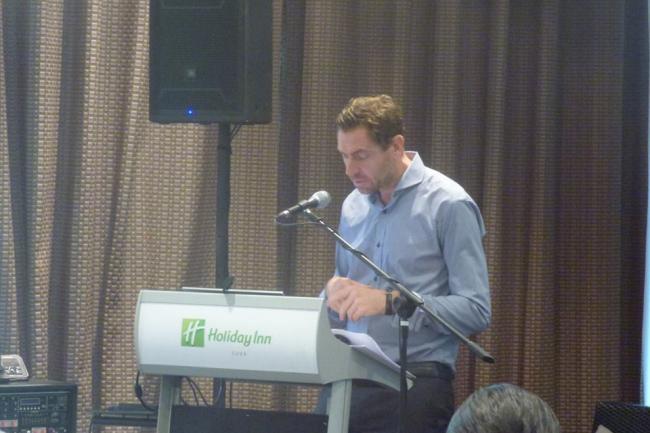
“As we ramp up to the World Humanitarian Summit in Istanbul in May 2016, there is a keen commitment to ensuring the gender-related recommendations, including those on reproductive health, are turned into real action,” said Sune Gudnitz, Head of the UN Office for the Coordination of Humanitarian Affairs, Regional Office for the Pacific.
“The humanitarian work being done under the Every Woman Every Child strategy is critical in boosting this momentum and the UN Office for the Coordination of Humanitarian Affairs (OCHA) is keen to ensure this piece of work is reflected in the Secretary- General’s report and the summit outcomes,” he said.
“With a strong El Niño now threatening 11 Pacific countries and placing up to 4.7 million people at risk, these the health and safety of women and children must be a priority consideration for humanitarian partners over the months ahead,” he added.
“Humanitarian crises put every woman and every child at grave risks,” said Her Royal Highness Princess Sarah Zeid of Jordan, speaking on the role of reproductive, maternal, newborn, child and adolescent health (RMNCAH) programs in building resilience to disaster and climate change.
“Women and children are 14 times more likely to die than men in disasters. Meeting the humanitarian and protection needs of women and children is therefore a critical priority for emergency managers and donors,” she said.
“The worst rates of preventable mortality and morbidity among women, adolescents and children occur in humanitarian settings, with 60 per cent of preventable maternal deaths and 53 per cent of under-five deaths taking place in settings of conflict, displacement and natural disasters. This is a critical consideration in a disaster-prone region like the Pacific,” she added.
Photo: UN OCHA Pacific
Support Our Journalism
We cannot do without you.. your contribution supports unbiased journalism
IBNS is not driven by any ism- not wokeism, not racism, not skewed secularism, not hyper right-wing or left liberal ideals, nor by any hardline religious beliefs or hyper nationalism. We want to serve you good old objective news, as they are. We do not judge or preach. We let people decide for themselves. We only try to present factual and well-sourced news.
Support objective journalism for a small contribution.