 Angkor
Monkeys at Cambodia's famed Angkor site pose risk to tourists, temples
Phnom Penh: Throngs of monkeys living in Cambodia's famed Angkor Archeological Park are posing a risk to tourists and temples, a Cambodian government agency said on Wednesday.
The Apsara National Authority (ANA), which is responsible for managing, safeguarding and preserving the Angkor site, said in a news release that the number of monkeys at the ancient park had increased significantly with the transition of natural life from wild monkeys to domestic monkeys.
It is estimated that there could be hundreds of monkeys in the Angkor Thom area. Those well-fed primates seem to be familiar to humans, as they no longer enter the forest in search of food, but instead wait for food from humans and sometimes snatch food from tourists, the agency said.
The ANA urged people to stop feeding those monkeys to take photos for commercial or entertainment purposes, so that the monkeys can live naturally and do not expect human feeding.
In the news release, local tourism professionals also mentioned the menacing behaviors the monkeys developed that pose a risk to people, temples and environmental hygiene at large, including biting tourists, rummaging trash bins, clinging to temples, and damaging tourist facilities.
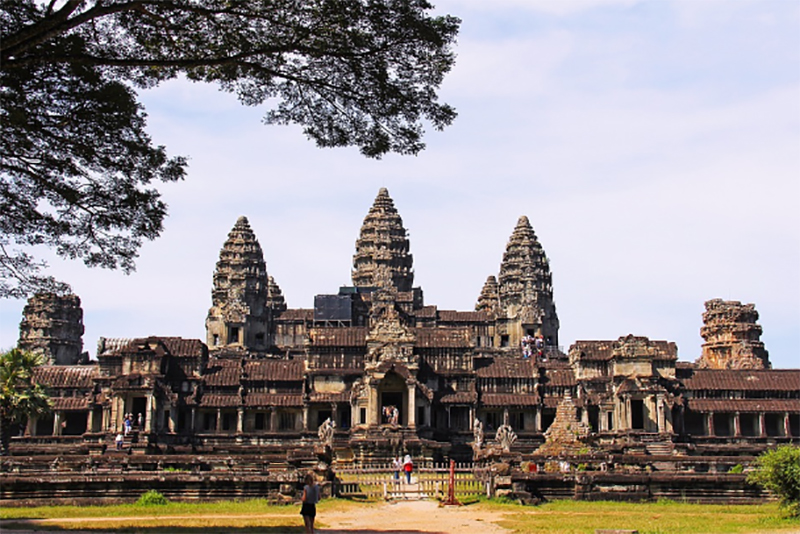
Located in Siem Reap province, the 401-square-km Angkor Archeological Park, inscribed on the World Heritage List of the United Nations Educational, Scientific and Cultural Organization (UNESCO) in 1992, is the most popular tourist destination in the Southeast Asian nation.
Support Our Journalism
We cannot do without you.. your contribution supports unbiased journalism
IBNS is not driven by any ism- not wokeism, not racism, not skewed secularism, not hyper right-wing or left liberal ideals, nor by any hardline religious beliefs or hyper nationalism. We want to serve you good old objective news, as they are. We do not judge or preach. We let people decide for themselves. We only try to present factual and well-sourced news.
Support objective journalism for a small contribution.