Proportion of women ministers all-time high, IPU/UN Women map shows
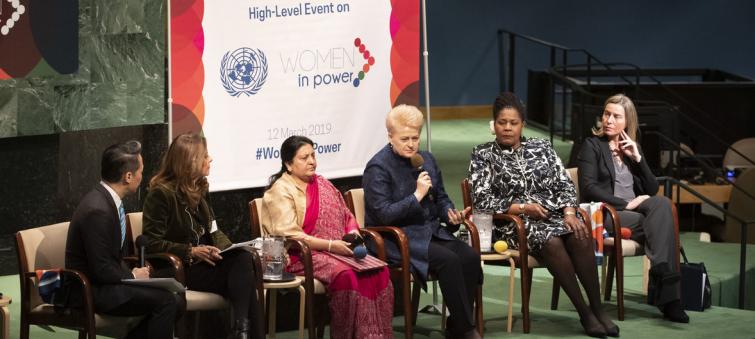
United Nations, Mar 13 (Xinhua/UNI) The proportion of women ministers is at an all-time high at 20.7 percent, 2.4 percentage points higher than that in 2017, according to data in the 2019 edition of the biennial IPU (Inter-Parliamentary Union)-UN Women map released Tuesday.
"Women's representation in political decision-making continues to rise slowly, with slight improvements since 2017," according to the map of Women in Politics launched during the 63rd Session of the Commission on the Status of Women (CSW63) at the UN headquarters in New York.
The map, however, finds that women's representation in top-level leadership has decreased from 7.2 per cent of elected heads of state to 6.6 per cent (10 out of 153), and from 5.7 per cent of heads of government to 5.2 per cent (10 out of 193).
Ethiopia saw the largest increase in women's political representation in the executive, from 10 per cent women ministers in 2017 to 47.6 per cent in 2019.
Mexico made the biggest strides in the Americas, with the addition of five women ministers, increasing the overall share of women ministers by 26.3 percentage points to 42.1 per cent.
The number of countries with no women ministers decreased from 13 in 2017 to 11, according to the map.
Strikingly, more women are in charge of portfolios traditionally occupied by men compared to 2017: 30 per cent more women ministers cover defense, 52.9 per cent more women cover finance, and 13.6 per cent more women cover foreign affairs.
"More women in politics leads to more inclusive decisions and can change people's image of what a leader looks like," said UN Women Executive Director Phumzile Mlambo-Ngcuka. "We still have a steep road ahead, but the growing proportion of women ministers is encouraging, especially where we see a rise in the number of countries with gender-balanced ministerial cabinets. These are the types of bold moves that we need if we are to dramatically increase women's representation in decision-making."
Support Our Journalism
We cannot do without you.. your contribution supports unbiased journalism
IBNS is not driven by any ism- not wokeism, not racism, not skewed secularism, not hyper right-wing or left liberal ideals, nor by any hardline religious beliefs or hyper nationalism. We want to serve you good old objective news, as they are. We do not judge or preach. We let people decide for themselves. We only try to present factual and well-sourced news.
Support objective journalism for a small contribution.