Sanitation becomes UN human right in enhanced fight against deadly infections
“It gives people a clearer perception of the right, strengthening their capacity to claim this right when the State fails to provide the services or when they are unsafe, unaffordable, inaccessible or with inadequate privacy,” UN Special Rapporteur on the human rights of safe drinking water and sanitation Léo Heller said.
The Assembly adopted a resolution earlier this month recognizing the distinct nature of the right to sanitation in relation to the right to safe drinking water, while keeping the rights together.
Heller said it would help governments and non-governmental organizations to specifically focus on what needs to be done to realize the right.
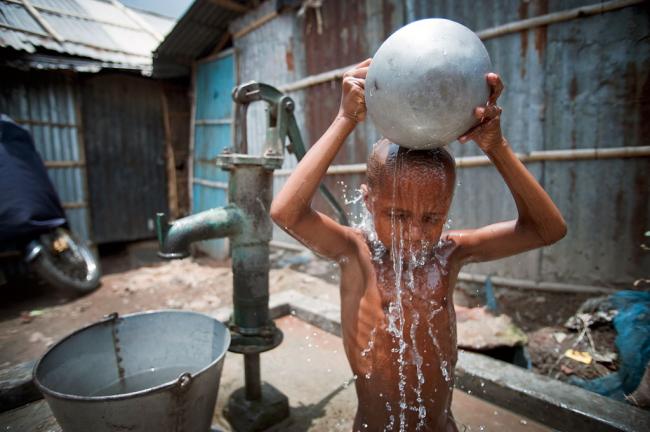
Lack of sanitation has a knock-on effect, affecting the pursuit and enjoyment of other human rights. It obstructs the right to health and life. Poor sanitation exacerbates the transmission of infectious diseases such as cholera, typhoid and hepatitis. Lack of sanitation hampers the right to education.
A recent UN study found that more 443 million school days are lost every year due to sanitation and water related issues. Inadequate sanitation facilities are a common barrier for school attendance, particularly for girls.
“It is hoped that this will have a direct impact on those women, children, people with disabilities and marginalised individuals and groups who currently lack access to sanitation…an opportunity to highlight their plight,” Heller said.
“The move to making sanitation its own human right means that we can directly address the particular human rights challenges associated with sanitation.”
In addition, having sanitation as its own right means that there can be change in approach and understanding, demonstrating that sanitation is not solely tied to water, he added.
Worldwide provision of clean water and sanitation is the sixth of the 17 Sustainable Development Goals (SDGs) adopted by the UN in September as part of the ambitious 2030 Agenda for Sustainable Development.
UN Photo/Kibae Park/www.justearthnews.com
Support Our Journalism
We cannot do without you.. your contribution supports unbiased journalism
IBNS is not driven by any ism- not wokeism, not racism, not skewed secularism, not hyper right-wing or left liberal ideals, nor by any hardline religious beliefs or hyper nationalism. We want to serve you good old objective news, as they are. We do not judge or preach. We let people decide for themselves. We only try to present factual and well-sourced news.
Support objective journalism for a small contribution.