UN report aims to equalize health conditions amidst exploding metro populations
The 'Global Report on Urban Health: Equitable, healthier cities for sustainable development,' jointly released by the World Health Organization (WHO) and the UN Human Settlements Programme (UN-Habitat), compares data on health from urbanites in almost 100 countries. The criteria vary from clean water access to HIV knowledge, obesity and air pollution.
The report shows that “in cities, progress in health depends not only on the strength of health systems, but also on shaping urban environments,” Dr. Marie-Paule Kieny, WHO Assistant Director-General for Health Systems and Innovation and Joan Clos, Executive Director of UN-Habitat said in the Foreword.
The report was led and written by the WHO Centre for Health Development in Kobe, Japan.
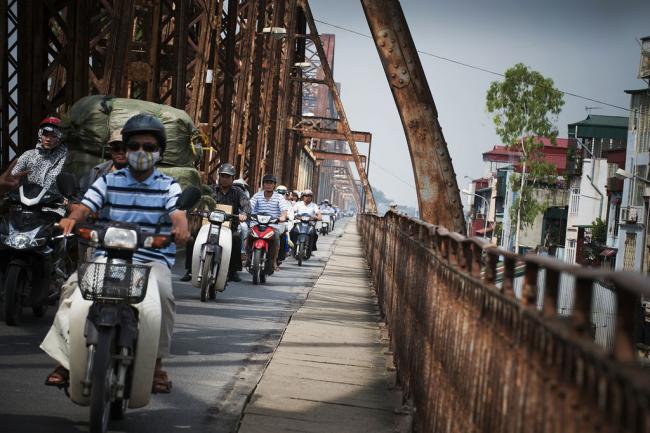
Suggestions are made for ensuring access to water and sanitation, reducing urban sprawl, increasing road safety, making cities more friendly for different ages and for people with disabilities, according to a joint press release from WHO and UN-Habitat.
The examples illustrate that the way the cities are planned “can profoundly affect the ability of their residents to live long, healthy and productive lives.”
This is particularly relevant given the growing disparities between the richest and poorest urban populations, which is a focus of the report.
For example, in addition to the 3.7 billion city-dwellers on Thursday, another one billion will be added by 2030. Of that figure, 90 per cent will be in low and middle-income countries.
The report finds that in 79 low- and middle-income countries, children in the poorest one-fifth of urban households are twice as likely on average to die before their fifth birthday compared with children in the richest percentile.
One factor is access to improved health coverage. On average, the report finds that coverage for the poor still lags behind. At least 400 million women, men and children are excluded from affordable health care.
Considered a basic human rights, universal health coverage is a target of the Sustainable Development Goals (SDGs) which the international community aims to realize by 2030.
“This report gives countries and cities practical tools to reduce health inequities and achieve the SDGs,” said Dr. Kieny.
UN Photo/Kibae
Support Our Journalism
We cannot do without you.. your contribution supports unbiased journalism
IBNS is not driven by any ism- not wokeism, not racism, not skewed secularism, not hyper right-wing or left liberal ideals, nor by any hardline religious beliefs or hyper nationalism. We want to serve you good old objective news, as they are. We do not judge or preach. We let people decide for themselves. We only try to present factual and well-sourced news.
Support objective journalism for a small contribution.