

Riyadh Airport shut until October 17 after deadly Houthi attacks
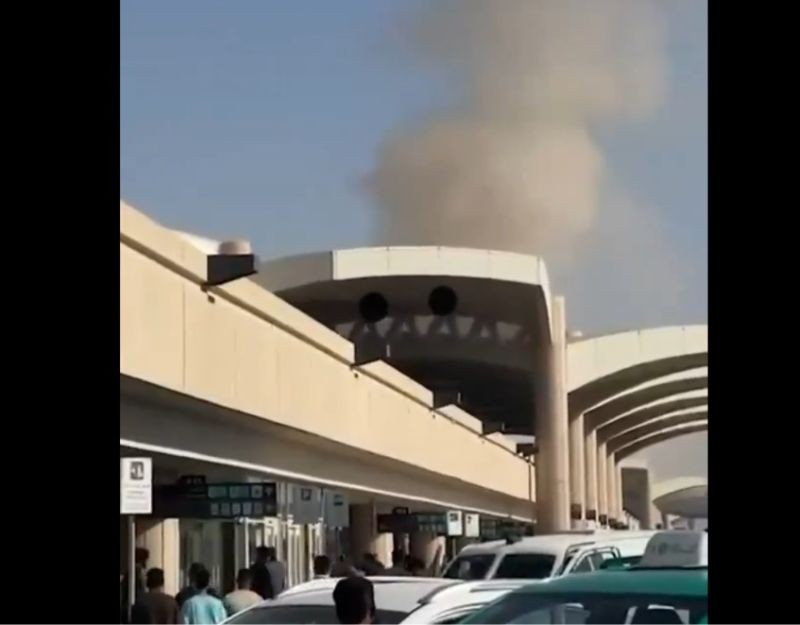
Saudi Arabia's King Khalid International Airport in Riyadh will remain closed until October 17 following a series of deadly attacks attributed to Yemen's Iran-backed Houthi rebels, disrupting air travel and prompting airlines to extend flight cancellations.
A Notice to Air Missions (NOTAM) issued on Monday said the airport would remain closed until 2100 GMT on October 17.
The extension is expected to force airlines to continue cancelling or rescheduling flights to the Saudi capital as authorities assess the security situation.
Saudi Arabia's civil aviation authority said operations had been suspended to complete procedures aimed at ensuring the safety and operational readiness of airport facilities.
King Khalid International Airport is one of Saudi Arabia's major aviation hubs, serving international passengers and connecting the capital with destinations worldwide.
Deadly attacks raise alarm over civil aviation
The closure follows a deadly weekend of attacks. A strike on Saturday reportedly killed 13 people and injured more than 300, while another attack on Sunday killed one person and wounded nearly a dozen others.
The incidents have intensified concerns over the growing risks to civilian aviation during armed conflicts, with airports, passengers, airport workers and flight crews potentially exposed to missile and drone threats.
Mark Zee, founder of aviation safety organisation OPSGROUP, described the sustained attacks on civil aviation as unprecedented in comments to Reuters, warning that the industry needed to reassess its understanding of aviation security risks.
Airlines extend flight cancellations
Airlines across Europe and Asia have suspended or postponed services to Riyadh as the security situation continues to evolve.
Lufthansa Group has cancelled flights to the Saudi capital until October 16, while Air France has extended its suspension of services to and from Riyadh until the end of October.
Etihad Airways has also extended flight cancellations affecting the kingdom. Delta Air Lines, meanwhile, has postponed the planned launch of its Atlanta-Riyadh service from October 23 to March 2027.
The disruptions have forced carriers to review flight schedules, consider alternative routes and adjust operations in response to changing security assessments.
US, European aviation authorities issue warnings
The US Federal Aviation Administration advised American carriers to exercise caution when flying to or over Saudi Arabia. The European Union Aviation Safety Agency has also expanded its warning concerning Saudi airspace, citing missile and drone attacks.
Flight-tracking data from Flightradar24 showed aircraft avoiding Riyadh on Monday, although flights continued to cross Saudi airspace and land at Jeddah, a major aviation hub on the kingdom's western coast.
Aviation analytics firm Cirium reported that flight cancellations across Saudi Arabia's airports had reached 46.4 per cent.
Middle East flight routes face disruption
The escalating security concerns have prompted aviation specialists to recommend alternative routes for flights connecting Europe and Asia.
OPSGROUP has advised airlines to avoid the southern aviation corridor over the Middle East and consider routes through Central Asia.
Such diversions can increase journey times, fuel consumption and operating costs while complicating crew schedules and aircraft rotations.
The Gulf region serves as a crucial international transit corridor linking Europe, Asia and Africa.
Disruptions to its airspace can therefore affect airlines and passengers far beyond Saudi Arabia, increasing the likelihood of missed connections, delays and further cancellations.
With Riyadh airport's closure extended until October 17, airlines and travellers face continued uncertainty as authorities monitor the security situation.
Support Our Journalism
We cannot do without you.. your contribution supports unbiased journalism
IBNS is not driven by any ism- not wokeism, not racism, not skewed secularism, not hyper right-wing or left liberal ideals, nor by any hardline religious beliefs or hyper nationalism. We want to serve you good old objective news, as they are. We do not judge or preach. We let people decide for themselves. We only try to present factual and well-sourced news.
Support objective journalism for a small contribution.