 Iran War
Trump claims Iran seeks ceasefire, warns of ‘stone age’ strikes until Hormuz reopens
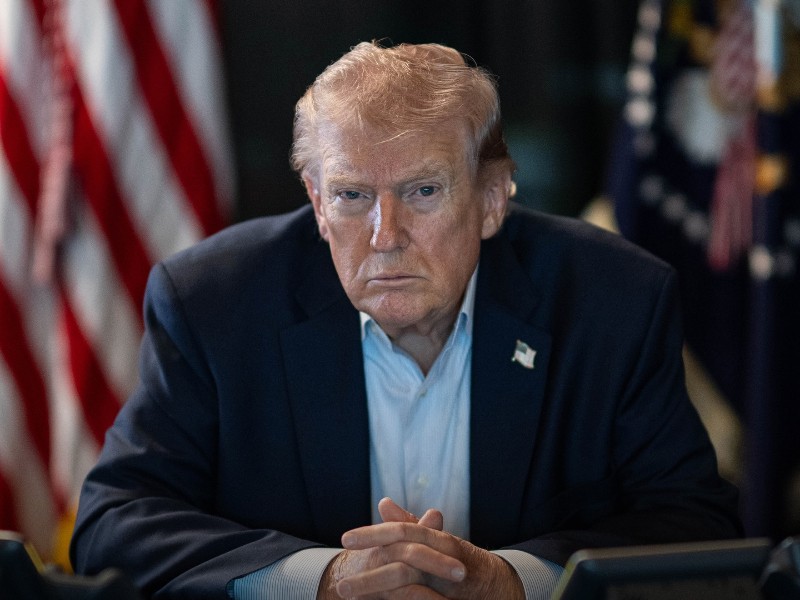
US President Donald Trump has stated that Iran’s leadership has expressed interest in a ceasefire, while making it clear that any pause in hostilities would depend on restoring access through the Strait of Hormuz.
In a post on his social media platform Truth Social, Trump described Iran’s current leadership as less radical than previous administrations and claimed that a request for a ceasefire had been conveyed to Washington.
The remarks came ahead of his address to the American public on the ongoing conflict.
Hormuz access central to US conditions
Trump indicated that the United States would only consider halting military operations if the Strait of Hormuz is fully reopened for global shipping.
The maritime corridor remains a focal point of the conflict due to its role in transporting a significant share of the world’s oil.
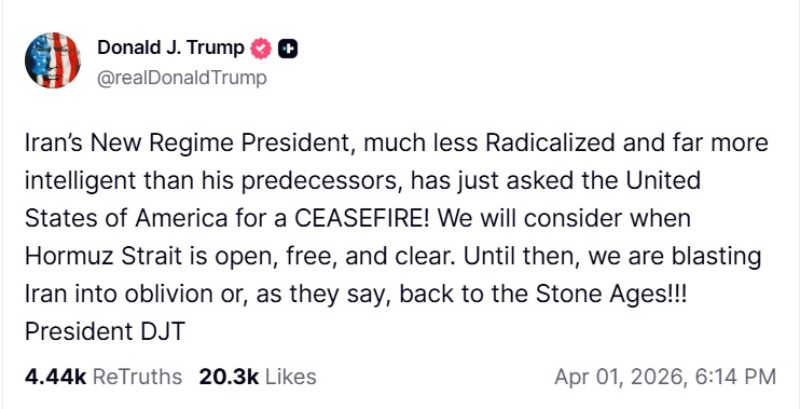
He emphasised that military operations would continue until the passage is “open, free and clear”, signalling that control over the waterway remains central to US strategic objectives.
Tehran rejects ceasefire narrative
Iranian officials have denied the assertion that Tehran is seeking a ceasefire.
Foreign Minister Abbas Araghchi stated in an interview that Iran intends to continue its military response and would not accept terms framed through external pressure.
He said that Iran does not operate under imposed deadlines and reiterated that the country remains prepared to defend itself across all scenarios.
Direct communication without formal negotiations
Araghchi confirmed that he has maintained direct communication with US Middle East envoy Steve Witkoff.
However, he clarified that these exchanges do not constitute formal negotiations.
He also indicated that confidence in diplomatic engagement with the United States remains low, describing trust levels as effectively non-existent.
Preparedness for further military escalation
Addressing the possibility of a ground offensive, Araghchi stated that Iran is prepared to respond.
He suggested that Iranian forces are equipped to handle escalation across multiple fronts, including potential land-based operations.
The comments reflect Tehran’s continued readiness to sustain its military posture despite ongoing air and naval strikes.
Diverging signals on war strategy
Trump’s latest statements follow earlier remarks in which he suggested that the United States could conclude its involvement in the conflict within weeks, regardless of whether a formal agreement is reached.
At the same time, he reiterated that US forces would continue targeting key Iranian capabilities, including infrastructure linked to nuclear and military operations.
Diplomatic openings and strategic calculations
Reports have indicated that certain Iranian officials, including Araghchi and Parliament Speaker Mohammad Bagher Ghalibaf, were temporarily excluded from Israeli targeting lists to allow for potential diplomatic engagement.
Despite these developments, both sides continue to project contrasting positions on negotiations and ceasefire prospects.
Hormuz at the centre of the crisis
The Strait of Hormuz remains a central factor shaping the trajectory of the conflict.
Its closure has disrupted global energy flows and heightened tensions across international markets.
As military operations continue and diplomatic signals remain mixed, the status of the waterway continues to influence both strategic decisions and the broader geopolitical landscape.
Support Our Journalism
We cannot do without you.. your contribution supports unbiased journalism
IBNS is not driven by any ism- not wokeism, not racism, not skewed secularism, not hyper right-wing or left liberal ideals, nor by any hardline religious beliefs or hyper nationalism. We want to serve you good old objective news, as they are. We do not judge or preach. We let people decide for themselves. We only try to present factual and well-sourced news.
Support objective journalism for a small contribution.